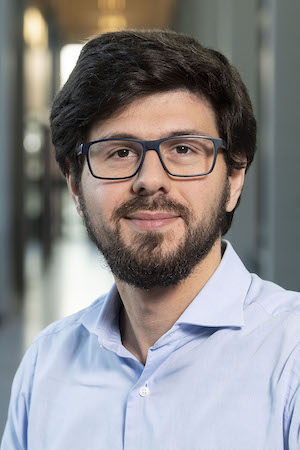
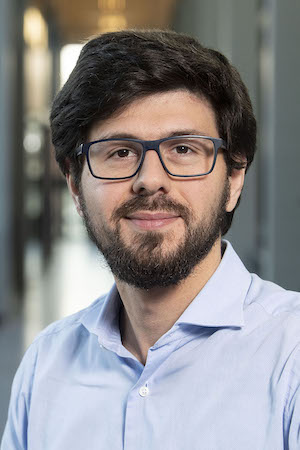
Matteo Lissandrini

foto profilo,  October 15, 2023
Position
Associate Professor
Academic sector
INFO-01/A - Informatics
Research sector (ERC-2024)
PE6_10 - Web and information systems, data management systems, information retrieval and digital libraries, data fusion

PE6_7 - Artificial intelligence, intelligent systems, natural language processing

Office
Palazzo di Lingue,  Floor Primo,  Room 1.15
Telephone
+39 045802 8853
E-mail
matteo|lissandrini*univr|it <== Replace | with . and * with @ to have the right email address.
Personal web page
https://lissandrini.com

Office Hours

Monday, Hours 12:30 PM - 2:30 PM,   Palazzo di Lingue, Floor Primo, room 1.15

Curriculum
  • pdf   cv-eng   (pdf, en, 101 KB, 03/03/26)
  • pdf   cv-ita   (pdf, it, 101 KB, 03/03/26)

Matteo Lissandrini is an Associate Professor in Computer Science working on Data Exploration and Knowledge Graph Management systems.

He has been as Assistant Professor in Computer Science at Aalborg University.  Matteo has also been a Marie Skłodowska Curie IF fellow. He received his PhD from the University of Trento (Italy) with a thesis on exploratory search for information graphs. He was also a member of the DbTrento research group.

He has been visiting researcher at the HP Labs in Palo Alto, California in 2013, and at the Cheriton School of Computer Science at the University of Waterloo, Canada, in 2014.

Modules

Modules running in the period selected: 12.
Click on the module to see the timetable and course details.

Course Name Total credits Online Teacher credits Modules offered by this teacher
Bachelor's degree in Languages and literatures for publishing and digital media Advanced Digital Humanities Lab (2025/2026)   3  eLearning
Master's degree in Languages, Literatures and Digital Culture Computational thinking (2025/2026)   6  eLearning
Master's degree in Languages, Literatures and Digital Culture Data and knowledge representation for the humanities (2025/2026)   6  eLearning
Bachelor's degree in Languages and literatures for publishing and digital media Databases and Information Systems for the Humanities (2025/2026)   6  eLearning
Bachelor's degree in Languages and literatures for publishing and digital media Advanced Digital Humanities Lab (2024/2025)   3  eLearning
Master's degree in Languages, Literatures and Digital Culture Computational thinking (2024/2025)   6  eLearning
Master's degree in Languages, Literatures and Digital Culture Data and knowledge representation for the humanities (2024/2025)   6  eLearning
Bachelor's degree in Languages and literatures for publishing and digital media Databases and Information Systems for the Humanities (2024/2025)   6  eLearning
Bachelor's degree in Languages and literatures for publishing and digital media Advanced Digital Humanities Lab (2023/2024)   3  eLearning
Master's degree in Languages, Literatures and Digital Culture Computational thinking (2023/2024)   6  eLearning
Bachelor's degree in Languages and literatures for publishing and digital media Computer-assisted translation laboratory (CAT tools) (2023/2024)   3  eLearning
Master's degree in Languages, Literatures and Digital Culture Data and knowledge representation for the humanities (2023/2024)   6  eLearning

Di seguito sono elencati gli eventi e gli insegnamenti di Terza Missione collegati al docente:

  • Eventi di Terza Missione: eventi di Public Engagement e Formazione Continua.
  • Insegnamenti di Terza Missione: insegnamenti che fanno parte di Corsi di Studio come Corsi di formazione continua, Corsi di perfezionamento e aggiornamento professionale, Corsi di perfezionamento, Master e Scuole di specializzazione.

Research groups

Rossijskij Θeatr
Nonostante l’attenzione che la ricerca ha dedicato al teatro musicale dell’Impero Russo del XVIII secolo, l’approccio sullo studio delle fonti necessita ancora di un aggiornamento. Una forma particolarmente promettente di tale aggiornamento è la sistematizzazione delle informazioni esistenti tramite le Digital Humanities e il lavoro sulle grandi masse di dati. Il progetto “Rossijskij Θeatr – Fonti musicali dell’Impero Russo, 1730 – 1836”, inserito nell’ambito del Progetto di Eccellenza “Inclusive Humanities” (2023–2027) (https://inclusivehumanities.eu/it/), prevede la creazione di un archivio digitale (comprensivo di dati e metadati) di fonti musicali connesse alla vita operistica nel contesto geografico e storico menzionato, a partire da una recensio generale delle fonti primarie necessarie alla critica testuale, alla ricostruzione e alla contestualizzazione di specifici “monumenti della cultura musicale” nel quadro generale dell'offerta spettacolare dell'Impero Russo.
VIA Systems
Verona Intelligent Analytics Systems: At the VIA Systems Lab, we pursue rigorous research at the intersection of intelligent analytics, information access, and advanced data-centric systems. Building on strong foundations in data exploration, intelligent data management, and knowledge graph systems, our mission is to push the boundaries of how complex information can be integrated, accessed, validated, visualized, and analyzed to empower both scientific discovery and real-world applications. Among others, we specialize in open data and digital archives for the digital humanities.
Research interests
Topic Description Research area
Data intensive scalable computing Analysis, evaluation and design of large scale parallel systems, with particular emphasis on scalable data processing, Big Data systems, and Cloud Computing Information Systems and Data Analytics Information systems applications
Semistructured databases This research topic deals with data models and languages for representing and querying semistructured data in a general and flexible way. Information Systems and Data Analytics Information systems applications
Knowledge Representation and Reasoning Tools and techniques for Knowledge Representation and Reasoning Artificial Intelligence for the Digital Humanities
Artificial intelligence
Linked Data Research on technologies, resources and application of Linked Data Artificial Intelligence for the Digital Humanities
Artificial intelligence
Knowledge representation Reasoning with knowledge; non-monotonic reasoning; reasoning with spatio-temporal constraints; defeasible logic. Artificial Intelligence Knowledge representation and reasoning
Knowledge representation Reasoning with knowledge; non-monotonic reasoning; reasoning with spatio-temporal constraints; defeasible logic. Software Engineering and Formal Verification Knowledge representation and reasoning
Projects
Title Starting date
ARMADA 3/1/25
DataGEMS 10/25/24
DAIDH 2024: Diversity, Accessibility and Inclusion in the Digital text and Cultural Heritage: Challenges and Perspectives 2/11/24


Share